Spinal Decompression in Laguna Niguel
Non-surgical spinal decompression in Laguna Niguel, CA — gentle, controlled traction eases pressure off compressed discs and irritated nerves, with no downtime.
Divine Healing Chiropractic
Spinal Decompression in Laguna Niguel
When a disc is compressed, the spine stops being something you move through your day with and becomes something you plan your day around. Spinal decompression is a non-surgical way to give that disc room to breathe. At Divine Healing Chiropractic in Laguna Niguel, Dr. Azien Mousavi uses gentle, controlled traction — also known as axial or vertebral decompression — to ease the vertebrae apart, lift pressure off the nerve, and let a dehydrated disc draw fluid back in. No incisions, no injections, and no recovery time afterward.
What it helps
Conditions we treat with spinal decompression
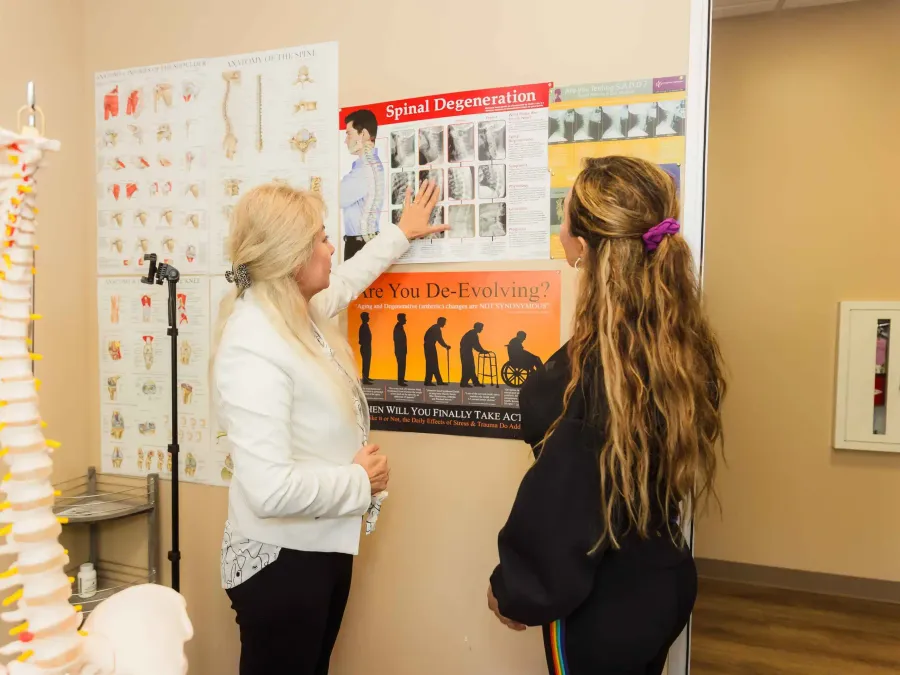
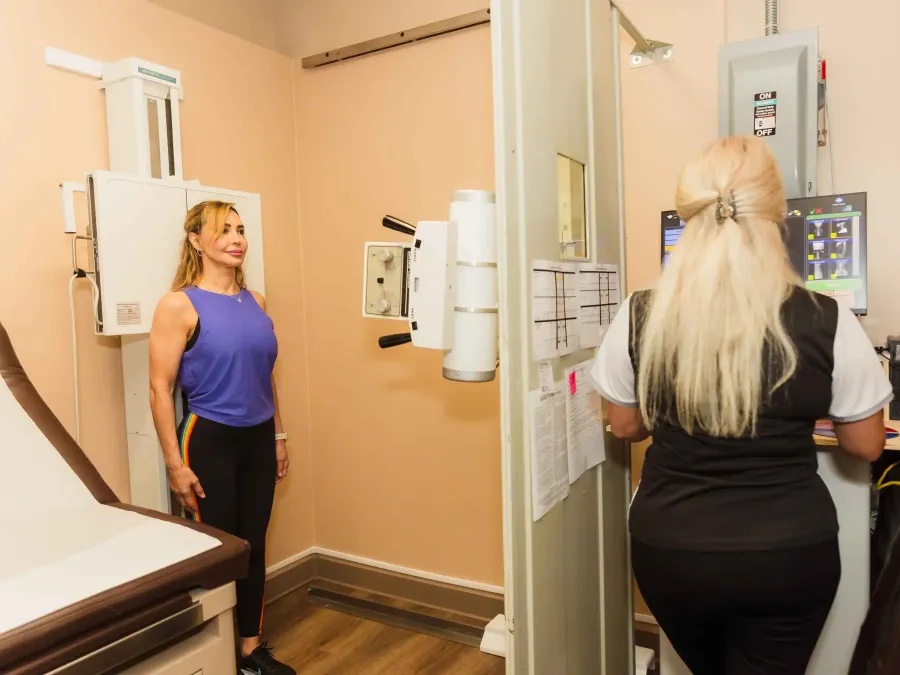
Dr. Azien Mousavi, DC is a chiropractor in Laguna Niguel who focuses on PEMF, laser therapy, and chiropractic adjustments to help patients heal naturally.
Read Dr. Azien Mousavi's full bio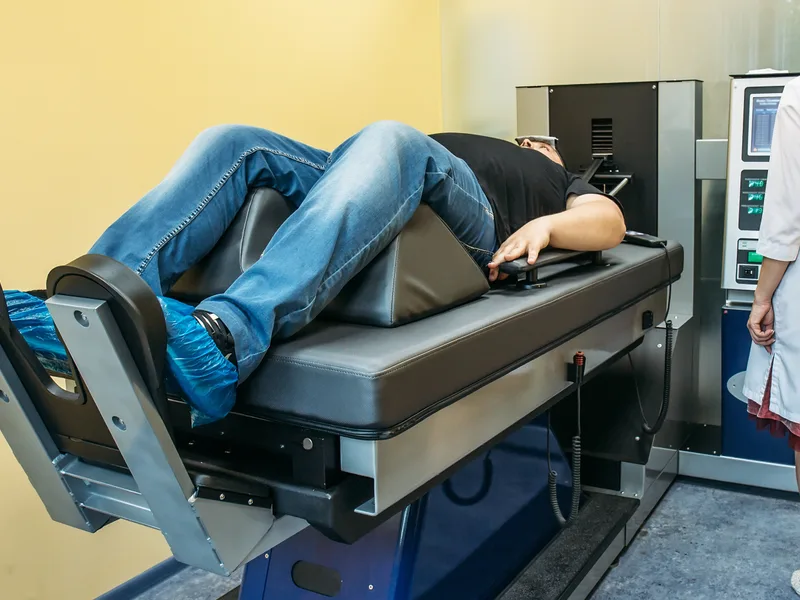
How it works
What to expect with spinal decompression
- Step 1
Exam and imaging review first
We examine how your spine moves, test the nerve for strength and sensation, and review any MRI or X-ray you already have. Decompression only makes sense once we know which level is involved and what is actually causing your pain.
- Step 2
A session built around your comfort
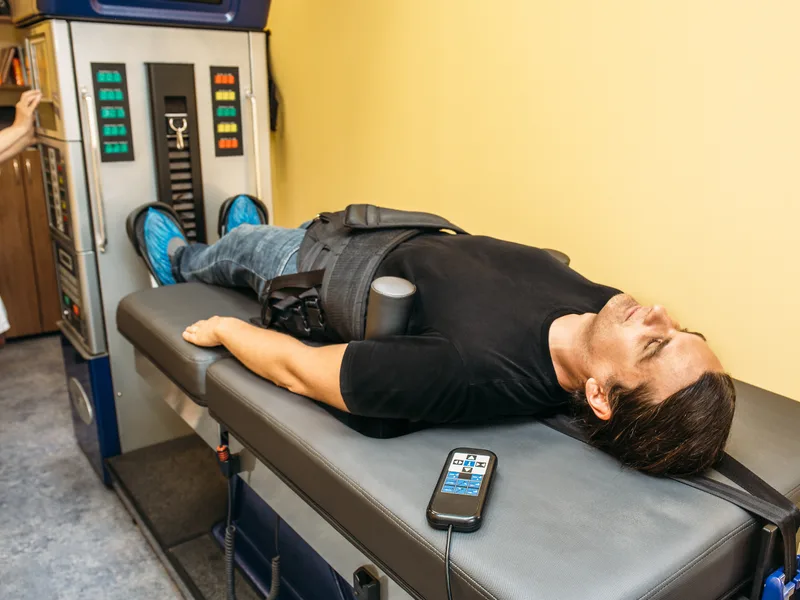
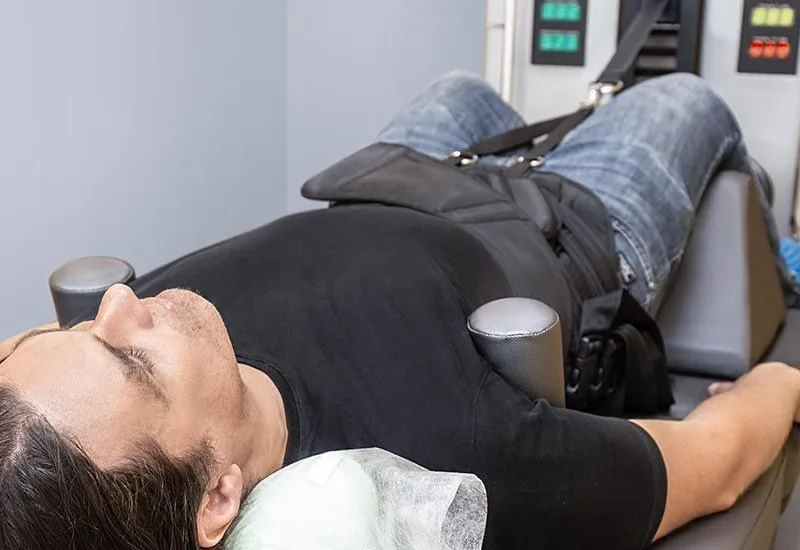
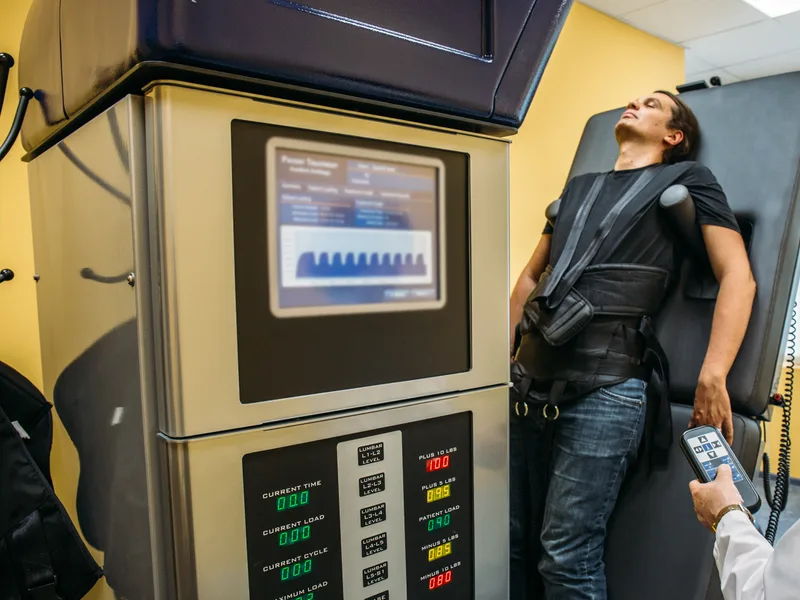
You lie fully clothed on the decompression table in a padded harness. The traction builds gradually, holds, and releases — most patients describe a firm, satisfying stretch, and many close their eyes for the whole session. We stay with you and adjust anything that doesn't feel right.
- Step 3
A plan with a finish line
Decompression works in a series, and it works best alongside adjusting and soft-tissue care that keeps the segment moving between visits. You get a specific number of sessions and a defined endpoint — never an open-ended schedule.
Why patients choose it
Benefits of spinal decompression
Relieves pressure on compressed discs and irritated spinal nerves
Creates space between vertebrae so nerves have room to settle
Encourages fluid, oxygen, and nutrients to move back into the disc
Non-surgical and drug-free — no incisions, no injections
Comfortable, fully clothed sessions with no downtime afterward
Treats the neck and the low back, with pressure tailored to each
Pairs naturally with adjusting, laser, PEMF, and soft-tissue work
The basics
About spinal decompression
Think of a spinal disc as a sponge. Gravity and everything you do all day squeeze fluid out of it; at night, at rest, your body soaks it back in. That exchange is how a disc stays tall, springy, and able to absorb shock — discs have almost no blood supply of their own, so changes in pressure are how they feed themselves.
Injury, inflammation, and years of steady load interrupt that cycle. The disc flattens, the vertebrae settle closer together, and the small opening each nerve travels through narrows. A crowded nerve doesn't stay quiet: it sends pain down an arm or a leg, weakens the muscles it supplies, and changes what you feel in your hands or feet. Rest alone rarely reverses it, because the disc never gets the pressure relief it needs to rehydrate.
Spinal decompression targets exactly that. Cycles of gentle traction lower the pressure inside the disc, open the space between the vertebrae, and encourage water, oxygen, and nutrients to move back into tissue that has been going without. It is non-invasive and, for nearly everyone, completely painless. It is also not a cure for every disc — Dr. Mousavi will tell you plainly which situation yours is.
Our approach
What makes our care different
Drug-Free & Non-Invasive
Natural relief without medication, injections, or surgery.
Corrects the Root Cause
We resolve the source of your pain for lasting results.
Restored Mobility
Move freely again with improved flexibility and posture.
Whole-Body Wellness
Support your nervous system and overall long-term health.
Care for the Whole Family
Gentle, effective care for every age, from kids to seniors.
Ready to get started?
Meet the Doctor
Get to know Dr. Azien Mousavi and our gentle, root-cause approach to care.
About the practice →Book Your Appointment
Same-week appointments are available. Request a time online in under a minute.
Request a time →$129 New Patient Special
New patient consultation, exam, and first treatment. (Our regular new patient price is $279.)
Claim the offer →Your first visit for just $129
Consultation + Exam + First Treatment — a one-on-one consultation, a thorough exam, and your first treatment: everything we need to understand your pain and start you on the path to relief.
(Our regular new patient price is $279)
Why a compressed disc keeps hurting
Every disc in your spine is a pressure system. Load it and fluid moves out; unload it and fluid moves back in. That rhythm is the only way a disc feeds itself, because unlike almost every other tissue in your body it has no direct blood supply to fall back on.
An injury, a long stretch of sitting, or simply decades of upright living can flatten that system out. The disc loses height, the vertebrae above and below settle closer together, and the small bony opening each spinal nerve passes through gets narrower. That’s when the symptoms start travelling — pain into the arm or down the leg, numbness or pins and needles, muscles that feel weaker than they should. And because the disc is now under constant pressure, the rehydration that would help it recover never quite happens.
How spinal decompression works
Spinal decompression interrupts that cycle mechanically. You rest on a decompression table, secured in a padded harness, while the table applies gentle axial traction — a measured pull along the length of your spine that builds, holds, and releases in cycles rather than pulling continuously.
Easing the vertebrae apart does two things at once. It lowers the pressure inside the disc, which draws fluid, oxygen, and nutrients back into tissue that has been going without them. And it widens the opening the nerve travels through, so an irritated nerve finally has somewhere to sit. For some spines Dr. Mousavi uses a flexion-distraction table instead, which achieves the same opening through slow, repeated hands-on motion rather than a sustained pull — the exam decides which one your spine responds to.
What to expect at your visit
Your first visit is an exam, not a treatment. Dr. Mousavi looks at how your spine moves, tests the nerve for strength and sensation, asks what makes the pain better and worse, and reviews any MRI or X-ray you already have. Disc pain has more than one possible source, and decompression is only worth your time if the exam points there.
If it’s a good fit, here’s what a session looks like:
- Setup — you stay fully clothed. For the low back, a padded harness is fitted around your waist and hips, usually with a bolster under your knees. For the neck, a cradle supports your head instead.
- Traction — the pull builds gradually to a level chosen for you, holds, and then releases. You may feel your body shift slightly as it begins, followed by a steady, gentle stretch.
- Monitoring — we stay with you and adjust the load if anything feels off. This should be comfortable from start to finish.
- After — you get up and go about your day. There’s no recovery period and nothing to restrict.
Sessions run about 15–25 minutes, and decompression is delivered as a series. Most patients notice change gradually over several visits rather than all at once.
Who it may help
We most often consider spinal decompression for patients dealing with:
- A herniated or bulging disc that’s pressing on a nerve
- Sciatica — pain, numbness, or weakness travelling down the leg
- Chronic back pain tied to a narrowed disc space or degenerative change
- Neck pain with arm symptoms from a compressed cervical disc
- Leg pain and nerve irritation that hasn’t responded to rest alone
Decompression is also one of the tools Dr. Mousavi draws on within corrective chiropractic care, where restoring the spine’s normal curve and spacing is the larger goal.
Why choose Divine Healing Chiropractic
Patients from Laguna Niguel, Mission Viejo, Aliso Viejo, Laguna Hills, and Dana Point come to us for disc problems because we treat the disc and everything loading it — not just the level that shows up on the report. Dr. Azien Mousavi combines spinal decompression with adjusting, laser therapy, and PEMF therapy, and she is straightforward about what conservative care can and cannot do for a given spine.
If your back or neck is deciding what you do each day, that’s worth an exam. Visit our New Patients page to see what a first visit involves, or contact us to book.
People come and see us for these and more
Every condition below is treated at our Laguna Niguel office. Tap any one to read how we approach it.
What is spinal decompression?+
Spinal decompression is a non-surgical therapy that applies gentle, controlled traction to the spine — you may also see it called vertebral axial decompression, spinal traction, or axial traction. The traction eases the vertebrae apart, lowers the pressure inside the disc between them, and takes strain off the nerve exiting at that level.
Does spinal decompression hurt?+
It shouldn't. Most patients describe it as a firm but comfortable stretch through the low back or neck, and a good number find it relaxing enough to doze off. You're monitored throughout, and the pull is adjusted the moment anything feels wrong.
What does a session actually feel like?+
If we're treating your low back, a padded harness is fitted around your waist and hips — snug and secure, but never tight enough to affect your breathing — often with a bolster under your knees. As the traction begins you may feel your body shift slightly, then a steady, gentle pull. Neck sessions use a cradle that supports your head instead of a harness.
What conditions does spinal decompression help?+
It's most often used for herniated, bulging, or degenerated discs, sciatica, pinched nerves, and the neck or low-back pain that comes with a narrowed disc space. Your exam determines whether it's the right fit for your spine specifically.
How many sessions will I need?+
Decompression is a series, not a single visit — how long depends on the disc and how long it's been that way. After your exam Dr. Mousavi gives you a specific, time-bound plan with a clear endpoint rather than open-ended care.
Is spinal decompression the same as an inversion table?+
No. An inversion table uses your own body weight and pulls on everything at once. Clinical decompression applies a measured, cycling force to a specific segment of your spine, at a level chosen for you and adjusted throughout the session.
Can it help me avoid back surgery?+
For many patients, conservative care resolves disc pain without an operation, and decompression is a reasonable thing to try first. But some spines genuinely need a surgical opinion — progressive weakness or loss of bowel or bladder control, for instance, needs urgent evaluation, not traction. We'll tell you honestly which category you're in.
Who isn't a candidate for spinal decompression?+
Traction isn't appropriate with a recent spinal fracture, spinal hardware or fusion, advanced osteoporosis, a tumor or active infection, significant instability, or during pregnancy. Screening for exactly this is part of the intake and exam before anything begins.
Can spinal decompression be combined with other treatments?+
Yes, and it usually is. Dr. Mousavi commonly pairs it with chiropractic adjusting, laser therapy, PEMF, and myofascial release, so the disc gets relief while the muscles and joints around it learn to hold the change.
Will my insurance cover spinal decompression?+
Coverage varies a great deal by plan. Share your insurance details before your first visit and our staff will verify your benefits and explain any out-of-pocket cost, at no charge. Affordable self-pay options are available either way.
Patient reviews
What our Laguna Niguel patients say
“Dr.Mousavi is absolutely incredible! I have had 2.5 weeks straight of low back pain being in my second trimester of pregnancy and after my first visit I finally had some relief! She uses more tools than just your standard adjustment and is such a sweet lady! Would definitely recommend 😊”
“What an incredible experience it has been working with her! She pours her heart and soul into her practice, and her intuitive, gentle approach has brought me so much relief and true healing.”
“You can immediately tell how passionate she is about her craft. Her healing touch and absolute dedication to her patients set her apart from any other doctor I’ve seen. It’s been such a rewarding journey under her care!”