Herniated Disc & Pinched Nerve Treatment in Laguna Niguel
Herniated and bulging disc treatment in Laguna Niguel, CA — non-surgical spinal decompression that reduces pressure on the disc so it can retract and heal.
Chiropractic care for herniated disc & pinched nerve
Get to the root of your herniated disc & pinched nerve
Also known as: Disc Injury, Bulging Disc, Slipped Disc, Disc Herniation, Ruptured Disc, Pinched Nerve, Nerve Impingement, Radiculopathy, Compressed Nerve, Cervical Radiculopathy
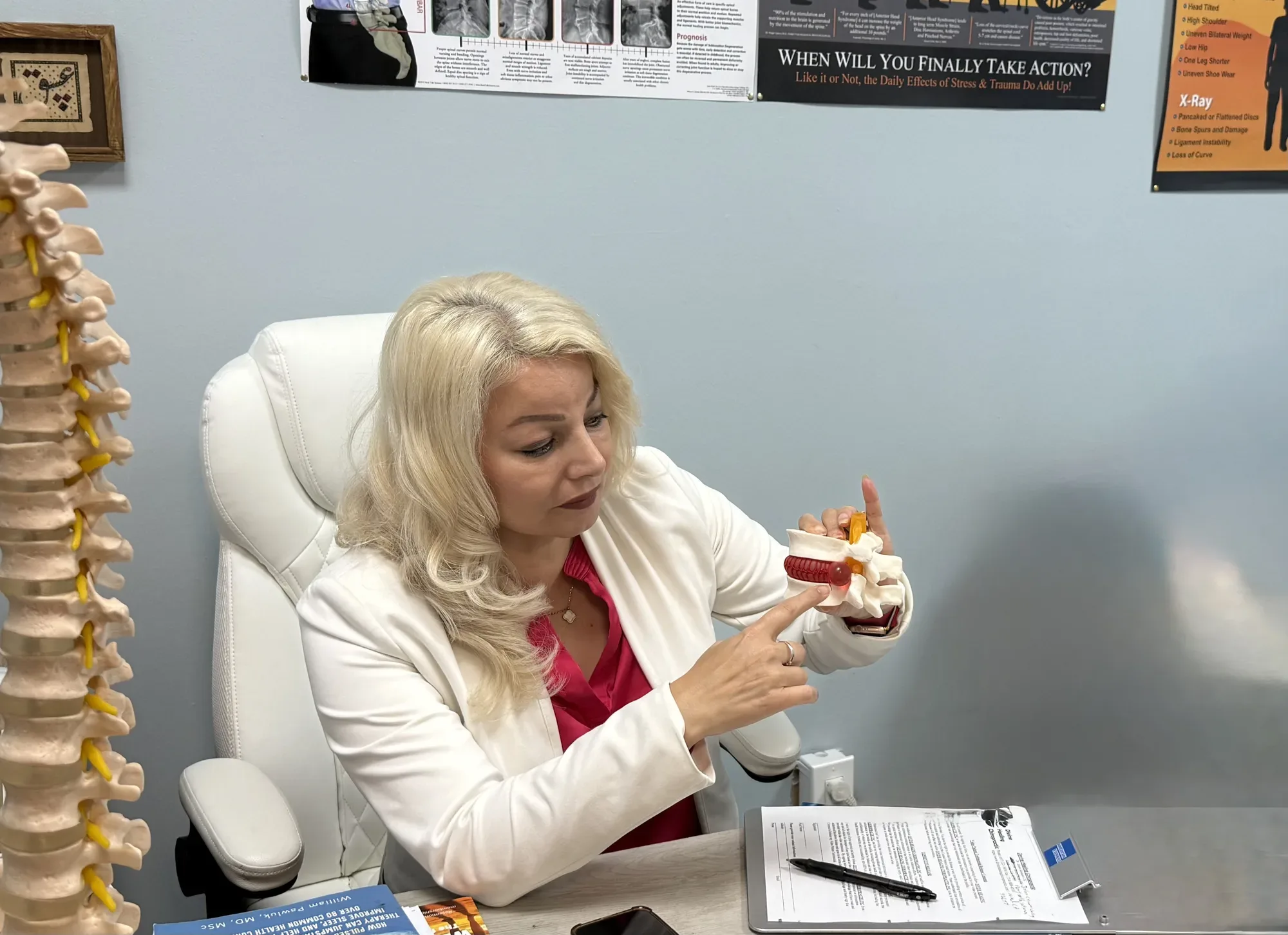
Chronic back or neck pain can make it hard to do even the simplest of tasks. People often experience pain from conditions like bulging or herniated discs in the spine, placing pressure on nerves and other spinal structures. One way to help alleviate some of the discomfort is to add spinal decompression therapy to your individualized treatment program.
Symptoms of herniated disc & pinched nerve
- ✓Sharp or burning pain in the lower back or neck
- ✓Pain that radiates down one arm or leg (often into the hand or foot)
- ✓Numbness or tingling in an arm, hand, leg, or foot
- ✓Muscle weakness in the affected arm or leg
- ✓Pain that worsens with prolonged sitting, bending forward, or coughing
- ✓Relief when lying down or changing position
- ✓Stiffness and reduced range of motion in the spine
- ✓Pain that worsens in certain positions — looking down, or sitting a long time
- ✓Muscle fatigue or difficulty gripping objects
Common causes
- Age-related disc degeneration (discs lose water content and become less resilient)
- Heavy lifting with poor mechanics or sudden twisting
- Prolonged sitting and forward posture that loads the lumbar and cervical discs
- Repetitive occupational or athletic strain
- Trauma such as a car accident, fall, or sports impact
- Genetic predisposition to disc weakness
- Excess body weight increasing compressive load on the spine
- Bone spurs from spinal arthritis narrowing the nerve canal
- Foraminal stenosis — narrowing of the opening where the nerve exits the spine
- Tight or inflamed muscles compressing a nerve, as in piriformis syndrome
Treatment options
Services we use to relieve herniated disc & pinched nerve
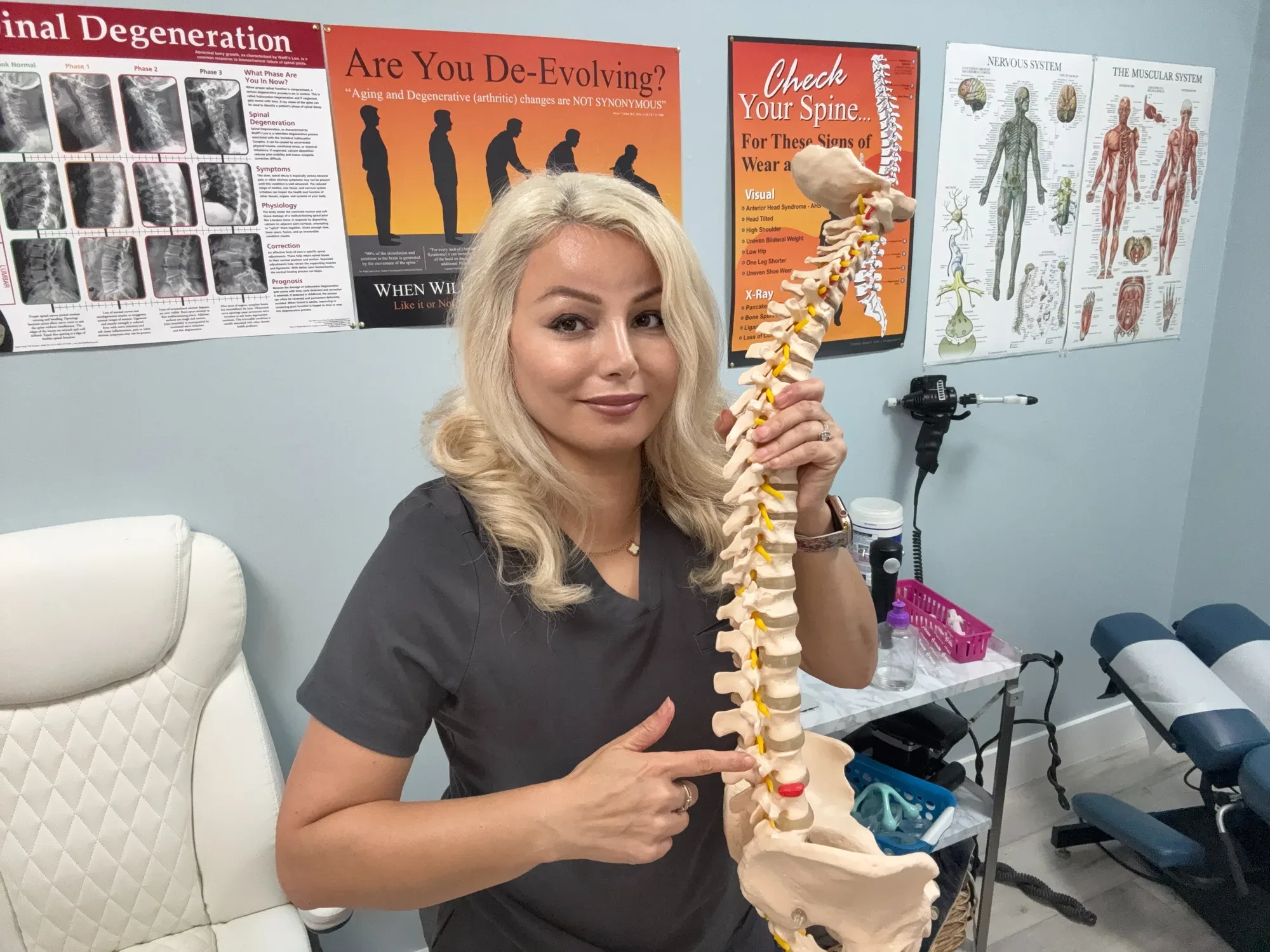
Dr. Azien Mousavi, DC is a chiropractor in Laguna Niguel who focuses on PEMF, laser therapy, and chiropractic adjustments to help patients heal naturally.
Read Dr. Azien Mousavi's full bio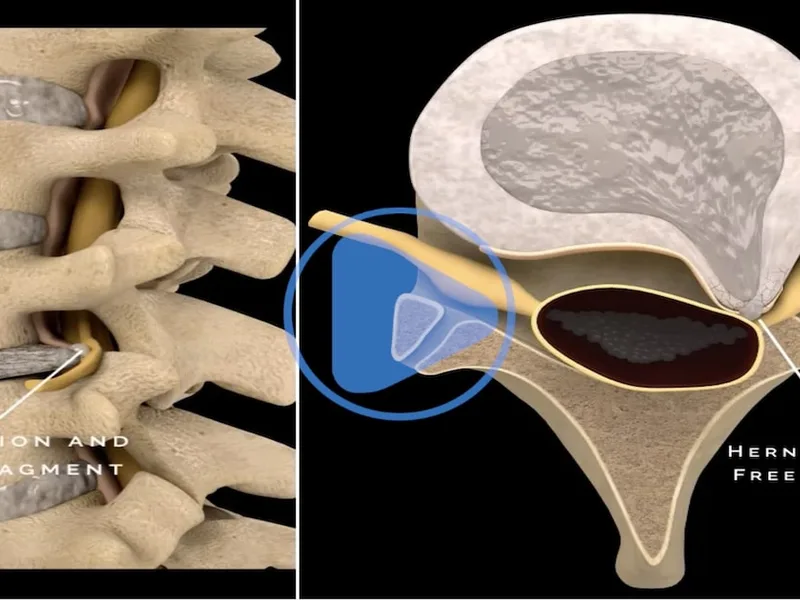
Our approach
How we treat herniated disc & pinched nerve in Laguna Niguel
- Step 1
Confirm the diagnosis
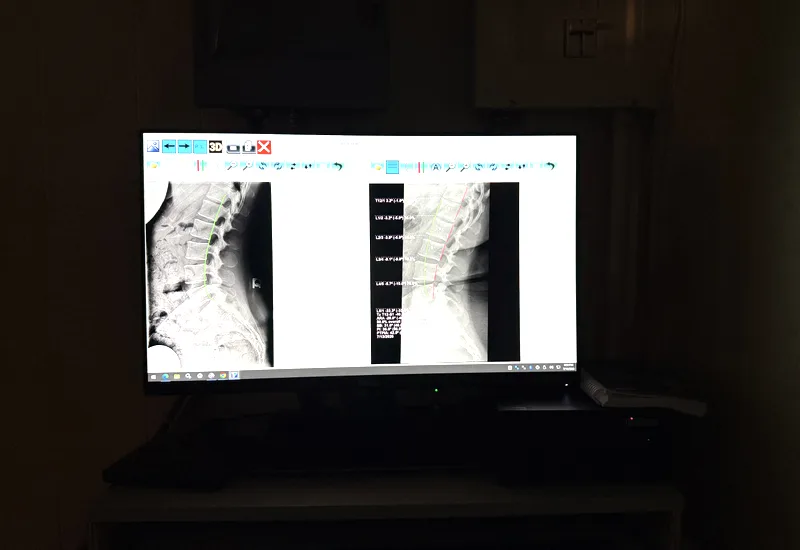
We identify whether a disc is genuinely involved, and where — including imaging where it will change the plan — before recommending decompression.
- Step 2
Non-surgical spinal decompression
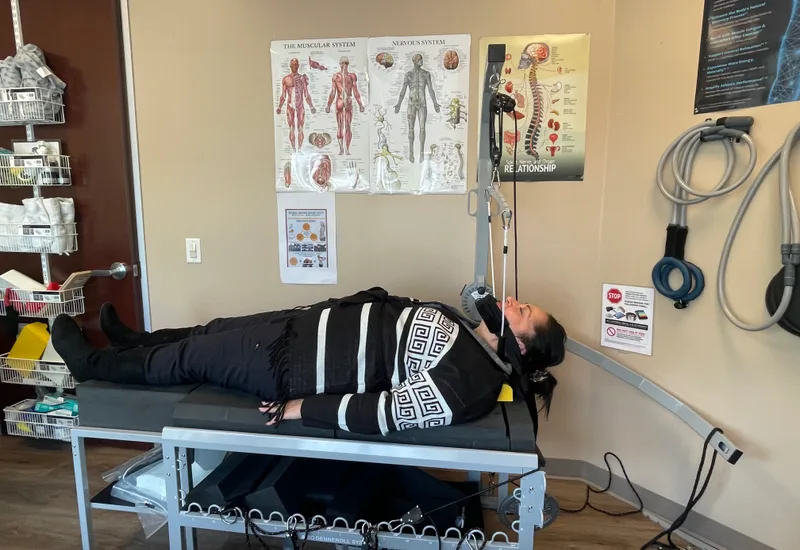
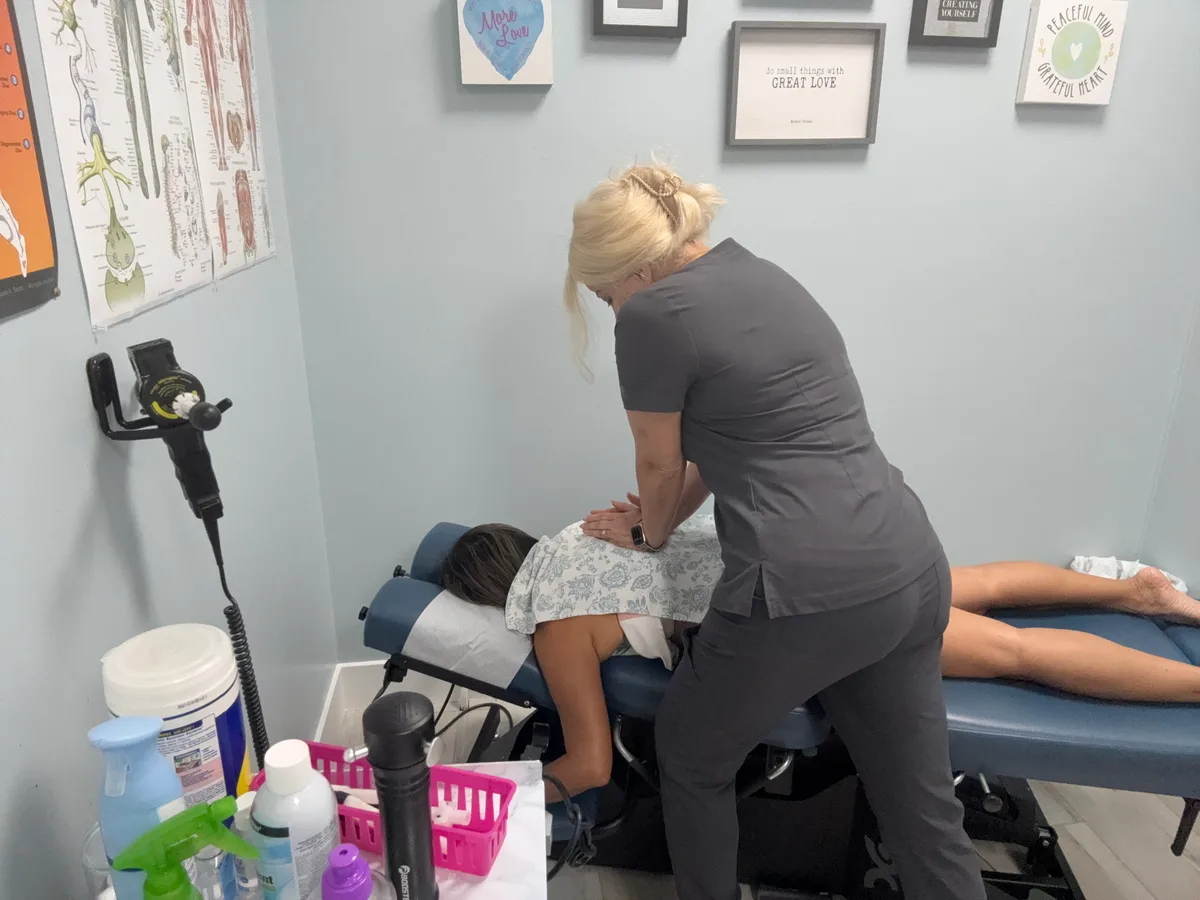
Motorized traction gently stretches the spine, reducing pressure on the disc and encouraging retraction of the bulge or herniation. Sessions may last up to 45 minutes and are usually delivered as a series.
- Step 3
Supporting therapies
Decompression complements massage therapy, adjustments, and rehab. Patients often experience less discomfort, inflammation, and muscle tension soon after a session.
The basics
Understanding herniated disc & pinched nerve
Non-surgical spinal decompression involves the use of motorized traction to gently stretch the spine. This procedure reduces pressure on — and may induce retraction of — herniated and bulging discs. With less pressure on the area, the body may continue with the healing process. Individuals may require a series of in-office treatments, and each session may last up to 45 minutes. Patients often experience less discomfort, inflammation, and muscle tension soon after a session.
A herniated disc can also follow a car accident. During a collision your body ricochets between the seatbelt and the seat, and herniated discs in the lower back and neck are among the most common results. If you experienced a herniated disc during an accident, you may have pain in the area of the herniation as well as pain that radiates into the legs.
Our approach
What makes our care different
Drug-Free & Non-Invasive
Natural relief without medication, injections, or surgery.
Corrects the Root Cause
We resolve the source of your pain for lasting results.
Restored Mobility
Move freely again with improved flexibility and posture.
Whole-Body Wellness
Support your nervous system and overall long-term health.
Care for the Whole Family
Gentle, effective care for every age, from kids to seniors.
Ready to get started?
Meet the Doctor
Get to know Dr. Azien Mousavi and our gentle, root-cause approach to care.
About the practice →Book Your Appointment
Same-week appointments are available. Request a time online in under a minute.
Request a time →$129 New Patient Special
New patient consultation, exam, and first treatment. (Our regular new patient price is $279.)
Claim the offer →Your first visit for just $129
Consultation + Exam + First Treatment — a one-on-one consultation, a thorough exam, and your first treatment: everything we need to understand your pain and start you on the path to relief.
(Our regular new patient price is $279)
What a herniated disc is
Between each pair of vertebrae sits a disc — a tough fibrous ring with a softer gel-like centre. It works as a spacer and a shock absorber, and it is what allows your spine to bend and twist without the bones grinding on one another.
A disc herniates when that outer ring cracks and some of the inner material pushes out through it. A bulging disc is a step short of that: the disc protrudes beyond its normal margin, but the outer ring is still intact. Either can narrow the space a nerve root travels through, and it is that nerve contact — not the disc damage itself — that produces most of the symptoms people arrive with.
This is worth saying clearly, because the word “herniation” sounds catastrophic. Plenty of people walk around with disc changes on imaging and no symptoms at all. What matters is whether yours is irritating a nerve, and what can be done about the pressure.
What causes a disc to herniate
- Lifting badly. Loading the spine while bent and twisted is the single most common mechanism — often something unremarkable, like a suitcase or a box at an awkward angle.
- A car accident or fall. Sudden compressive or shearing force through the spine. These frequently do not hurt immediately; see auto accident care.
- Sustained poor posture. Years of loading the discs unevenly, particularly through the lower back and neck. See poor posture.
- Age-related change. Discs lose water content over time, becoming flatter and less pliable, and a stiffer disc tolerates less before its outer ring gives.
- Repetitive strain. Occupations and sports involving constant bending, lifting, or rotation load the same segment thousands of times over.
Symptoms of a herniated disc
What you feel depends far more on which nerve is involved than on how large the herniation is:
- Pain radiating into an arm or a leg, often sharper and further-travelling than the local back pain
- Numbness or pins and needles following a specific band of skin
- Weakness in a muscle group — a foot that catches, or a grip that gives out
- Pain that worsens with sitting, coughing, sneezing, or bending forward
- Relief in certain positions and reliable aggravation in others
In the lower back, a herniation pressing on the nerve roots that form the sciatic nerve produces sciatica. In the neck, the same mechanism refers symptoms into the shoulder, arm, and hand.
Weakness that is getting worse, symptoms in both legs, or any change in bladder or bowel control need urgent medical assessment rather than a chiropractic appointment. We will tell you plainly if that is what your exam shows.
Degenerative disc disease is a different problem
Degenerative disc disease gets confused with herniation constantly, and they are not the same thing. DDD is the gradual drying and thinning of the discs that comes with age and use — a process, not an injury. It narrows the space between vertebrae, stiffens the segment, and often produces a deep ache and morning stiffness rather than the sharp radiating pain of a nerve compression.
The two are related in that a degenerated disc is more vulnerable to herniating. But they are assessed differently and treated differently, which is one of the reasons we image before building a care plan rather than after. See our X-ray page for how that works.
What to expect from spinal decompression
Non-surgical spinal decompression involves the use of motorized traction to stretch the spine. This gentle procedure reduces pressure on and may induce retraction of herniated and bulging discs. With less pressure on the area, the body may continue with the healing process.
At Divine Healing Chiropractic we use non-surgical spinal decompression to help treat back or neck pain, sciatica, bulging or herniated discs, worn spinal joints, and injured spinal nerve roots. Spinal decompression gently stretches the spine to change the force and position of the spine. By making this change, pressure is removed from the spinal discs and bulging or herniated discs may retract.
The benefits of spinal decompression
Non-surgical spinal decompression can complement a range of other therapies, such as massage therapy. This non-invasive therapy is often included as part of an effective treatment plan offering benefits like:
- Improved oxygen, blood flow, and movement of nutrients to an affected area, promoting healing
- Reduced pressure on injured discs, often causing a retraction of bulging or herniated discs
- Decreased pressure on surrounding nerves and structures
- Being able to perform daily activities and exercises more easily
- Reduced pain in the back or neck
Individuals may require a series of in-office treatments. Each session may last up to 45 minutes. Patients often experience less discomfort, inflammation, and muscle tension soon after a session.
When surgery is on the table
Surgical spinal decompression is used for more serious cases and may be suggested for those with bony growths or ruptured discs. Types include corpectomy, laminotomy, and discectomy. There are inherent risks to any surgery. Dr. Mousavi will clearly explain your options, and will refer you on where surgical assessment is warranted rather than continuing care that isn’t going to help.
Herniated discs after a car accident
Auto accidents are known to cause injuries that may not be readily apparent directly after the collision — including sprains and strains, whiplash, and herniated discs. Spinal decompression therapy is used for treating herniated discs in the back and neck and unpinching compressed nerves, by applying a targeted force to the specific area with the herniation in order to increase the spaces between the vertebrae. This gives the disc room to retract and heal. See our auto accident care page for more.
Our team can help
For more information about spinal decompression, contact Divine Healing Chiropractic or call (949) 249-2720.
Why choose chiropractic
Chiropractic care vs. the typical herniated-disc routine
| Comparison factor | Chiropractic Care | Pain Meds & Surgery |
|---|---|---|
| Addresses the cause directly | ✓Restores motion and calms nerve irritation | ✕Medication masks the pain signal |
| Drug-free & non-invasive | ✓Always | ✕Rarely |
| Risk of side effects | ✓Minimal | ✕Higher (meds, surgical complications) |
| Personalized to your disc level | ✓Targeted care plan | ✕One-size-fits-all protocol |
| Builds long-term spinal support | ✓Rehab and core training included | ✕Seldom addressed |
| Recovery timeline | ✓Active & gradual — most improve in weeks | ✕Surgery recovery often months-long |
Patient reviews
What our Laguna Niguel patients say
“I highly recommend Divine Healing Chiropratic to anyone seeking exceptional, life-changing care. Years of leading an active lifestyle left me in severe, chronic neck pain, and restricted mobility from cumulative wear and tear. Dr. Mousavi stepped in with a targeted expert approach that completely transform my physical health. Not only has she success successfully eliminated my pain, but she has also fully restored the rotation of my head. Thanks to her dedicated care, I can move freely and comfortably again, and I confidently trust her with my long-term wellness.”
“Dr. Mousavi has really helped me with some chronic issues from having a desk job and playing pickleball regularly. Her practice offers a great massage therapist as well!”
“My husband and I had the honor and pleasure to meet Dr Mousavi from Divine Chiropractic in Laguna Niguel. I was in a lot of pain due to a pinch nerve on the left side of my neck. I have a very high tolerance for pain however this pain would not allow me to sleep. We just completed our 3rd session, I am sleeping through the night. All sharp pain is gone. Dr Mousavi is a God Send! Also, she is one of the Sweetest Persons who knows her practice. We highly recommend Dr Mousavi, she will take the Best care of you and your family. We are So Grateful! With Much Appreciation, Debbie and Terry Hilgen”
Good to know
Herniated Disc & Pinched Nerve FAQ
Still have questions? Contact us — we're happy to help.
Can a herniated disc heal without surgery?+
Often, yes. Conservative care — gentle adjustments, corrective exercise, and supportive soft-tissue therapy — can calm nerve irritation and give the tissue a chance to heal. We refer for a surgical opinion whenever red flags — progressive weakness, or bowel or bladder changes — are present.
What is the difference between a herniated disc and a bulging disc?+
A bulging disc protrudes outward but the outer ring is still intact. A herniated (ruptured) disc means the outer ring has cracked and the inner gel has pushed through. Both can compress nearby nerves and cause similar symptoms; both often respond to conservative care.
How does chiropractic care help a disc injury?+
Gentle, low-force adjustments restore normal motion to the joints around the affected disc, easing irritation on the nearby nerve. Combined with corrective exercise and soft-tissue therapy, this reduces inflammation and rebuilds the support the disc needs to heal.
How do I know if my back pain is disc-related?+
Disc pain often radiates into a limb, worsens with sitting or bending, and may come with numbness or tingling. A thorough orthopedic and neurological exam — and sometimes imaging — is the reliable way to know. Book an exam and we'll give you a clear answer.
How many visits will I need?+
It depends on which disc is involved, how long you've had symptoms, and how your body responds. After your exam, Dr. Mousavi gives you a specific, time-bound plan with a realistic endpoint — not open-ended visits.
Do I need an MRI before coming in?+
Not necessarily. Most disc injuries can be assessed clinically on the first visit. We order or refer for imaging only when the result would change your care plan — and we explain exactly when and why.
Is chiropractic adjustment safe when I have a disc injury?+
Yes, when the technique is appropriate for the condition. We modify our approach for disc patients — using gentler, low-force methods and pairing them with corrective exercise and soft-tissue therapy — and we screen for contraindications before any treatment begins.
What red flags should send me to the ER instead of a chiropractor?+
If you experience sudden loss of bladder or bowel control, rapidly progressive leg weakness, or severe pain following major trauma, go to an emergency room immediately. These signs suggest a more serious injury that needs urgent medical evaluation.
Can disc injuries come back after they heal?+
They can if the underlying mechanics — weak core, poor posture, movement habits — are not corrected. That's why our plans include corrective exercise — to rebuild the support system that protects the disc long-term.
Do you treat cervical (neck) disc injuries as well?+
Yes. Cervical disc injuries cause arm pain, hand numbness, and neck stiffness and are treated with the same combination of gentle adjustments, rehab, and soft-tissue therapy we use for lumbar discs.
How is a pinched nerve different from sciatica?+
Sciatica is one specific kind of pinched nerve — compression affecting the sciatic nerve, which is why the pain runs down the back of the leg. "Pinched nerve" is the broader term for compression anywhere along the spine, including the neck, where it sends symptoms into the arm and hand instead.
Can a pinched nerve go away on its own?+
Sometimes, if the cause is temporary inflammation or a position you have since corrected. But when the compression comes from a disc, a bone spur, or a narrowed foramen, the mechanical cause is still there and symptoms tend to return or worsen. An exam tells you which situation you are in rather than leaving you to guess.
Can a chiropractor help a pinched nerve?+
Yes, for the great majority of presentations without red flags. Restoring motion to the restricted segment, decompressing the area around the nerve root, and rebuilding the support around it addresses the mechanical cause rather than only muting the signal. Where we find a red flag or a case that needs imaging or a surgical opinion first, we say so.
Will my insurance cover disc treatment?+
We accept many major plans and offer affordable self-pay options. Send us your insurance details and we'll verify your benefits before your first visit so there are no surprises.